
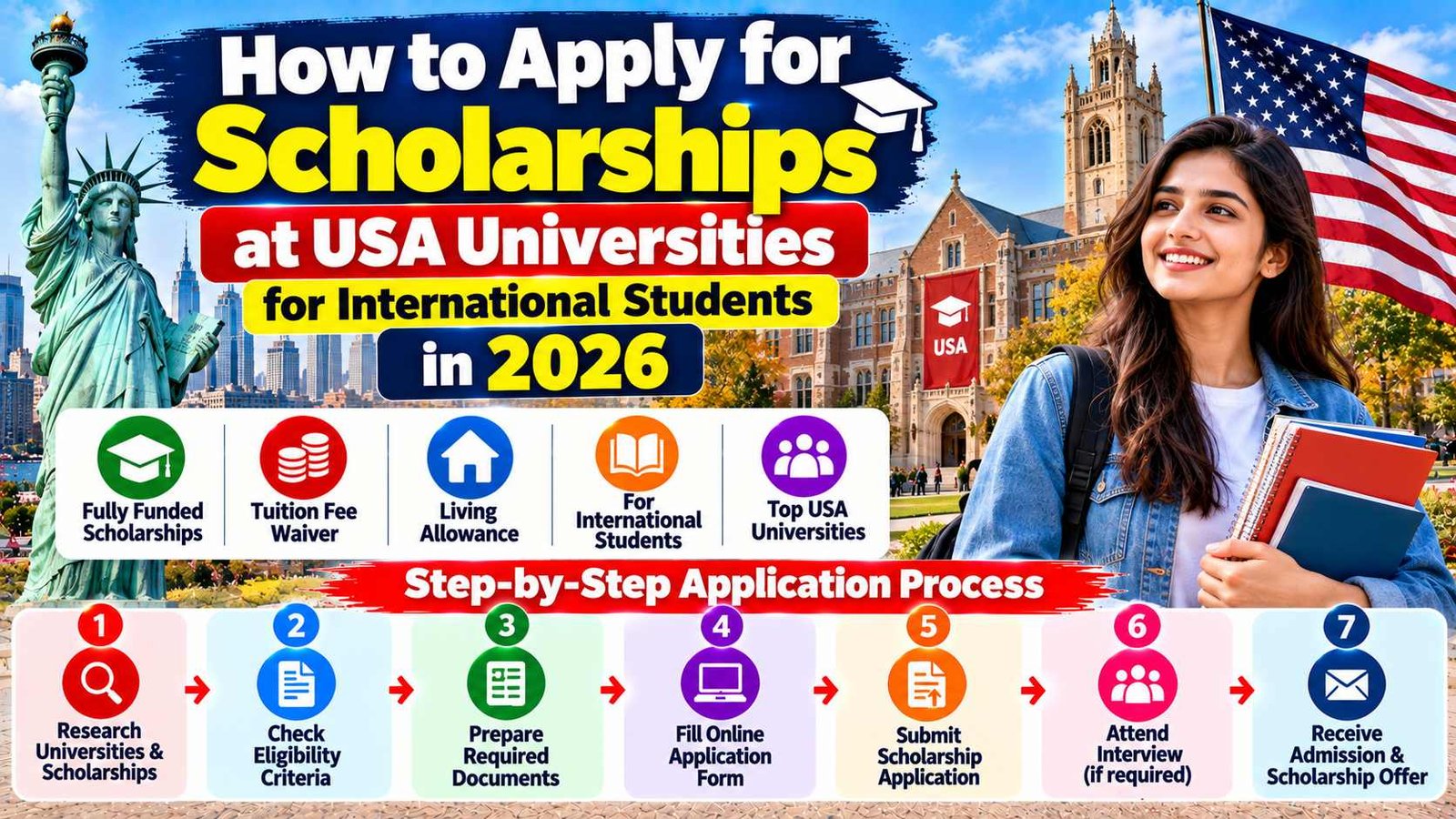
Studying in the United States is a dream for many international students because American universities offer a wide range of undergraduate, postgraduate, and research programs. However, tuition fees, accommodation, health insurance, and other living expenses can make studying in the USA expensive.
The good news is that international students may qualify for university scholarships, merit-based awards, need-based institutional aid, graduate assistantships, and selected government-sponsored scholarship programs. The amount of financial support depends on the university, course, academic performance, financial circumstances, and eligibility requirements.
In this article, you will learn how to apply for scholarships at USA universities as an international student in 2026, including eligibility requirements, application procedures, required documents, scholarship websites, deadlines, and tips for improving your chances of selection.
1. What Is a Scholarship in the USA?
A scholarship is financial assistance awarded to students to help pay for their education. Depending on the scholarship, the award may cover part or all of the tuition fees and, in some cases, additional educational expenses.
International students can explore several types of scholarships in the USA.

Merit-Based Scholarships
Merit-based scholarships are awarded based on academic achievements, leadership, extracurricular activities, special talents, or other accomplishments.
Students with strong academic records and outstanding achievements may be competitive applicants.
Need-Based Financial Aid
Need-based financial aid is awarded according to a student’s demonstrated financial circumstances. Availability for international students varies significantly by university.
Some universities offer substantial financial assistance to eligible international applicants, while others provide limited or no need-based institutional aid.
Fully Funded Scholarships
Fully funded scholarships may cover tuition fees, living expenses, health insurance, and other approved costs. However, coverage varies by program, and fully funded awards are highly competitive.
Graduate Assistantships
Graduate students, particularly those pursuing master’s or doctoral programs, may find teaching assistantships, research assistantships, or other university funding opportunities.
These positions may provide a stipend, tuition support, or both, depending on the institution and department.
2. Who Can Apply for Scholarships at USA Universities?
International students may apply for scholarships if they meet the eligibility requirements of the university or scholarship program.
Common requirements include:
- A strong academic record.
- Completion of the required previous qualification.
- Admission to an eligible degree program, if required.
- English-language proficiency, when applicable.
- A statement of purpose or personal essay.
- Letters of recommendation, if required.
- Evidence of financial need for need-based awards.
- Leadership, research, extracurricular, or professional achievements, depending on the award.
Some scholarships are available to first-year undergraduate students, while others are intended for transfer students, master’s students, PhD candidates, or researchers.
Important: There is no single eligibility rule for all scholarships in the United States. Always check the official university website for the scholarship you want to apply for.
3. How to Find Scholarships at USA Universities
Finding the right scholarship is one of the most important steps in the application process.
You can begin with these official resources.
1. EducationUSA Financial Aid Search
Search for scholarship and financial aid opportunities offered by US universities and other organizations.
Visit EducationUSA Financial Aid
2. EducationUSA Study Guide
Learn about researching universities, financing your education, completing applications, and applying for a student visa.
3. Fulbright Foreign Student Program
Explore opportunities for eligible international graduate students, young professionals, and artists. Application requirements depend on the applicant’s home country.
Visit the Fulbright Foreign Student Program
4. Individual University Websites
Visit the official admissions or financial aid pages of universities you are interested in. Search for sections titled “International Scholarships,” “Merit Scholarships,” or “Graduate Funding.”
EducationUSA recommends researching universities and funding options early because application requirements and deadlines differ between institutions.


4. How to Apply for Scholarships at USA Universities Online
Follow these steps to find suitable scholarships and submit your applications.
Step 1: Choose Your Degree Program
First, decide which level of education you want to pursue:
- Bachelor’s degree
- Master’s degree
- PhD or doctoral degree
- Research program
- Other eligible academic programs
Choose a subject that matches your academic background, career goals, and interests.
For example, students may consider computer science, engineering, business administration, public health, economics, or other available programs.
Step 2: Research Universities
Prepare a list of universities offering your preferred course.
Compare the following details:
- Tuition fees.
- Scholarship availability.
- Admission requirements.
- English-language requirements.
- Application deadlines.
- Living expenses.
- Financial aid for international students.
Do not choose a university based only on the amount of scholarship advertised. Calculate the total cost you would need to pay after receiving the award.
Step 3: Check Scholarship Eligibility
Open the university’s official scholarship page and read the eligibility requirements carefully.
Check whether the scholarship is available to international students and whether you must submit a separate scholarship application.
Some universities automatically consider eligible applicants for certain merit scholarships when they apply for admission. Other awards require separate forms or additional essays.
Step 4: Prepare Your Documents
Collect the documents required for your university and scholarship applications.
Make sure your academic transcripts, certificates, and other records are accurate and available in the required format.
If your documents are not in English, check whether certified translations are required.
Step 5: Apply for University Admission
Complete the university’s online admission application.
Depending on the institution and program, you may need to provide:
- Personal information.
- Academic history.
- Course preferences.
- Academic transcripts.
- English-language test results, if required.
- Personal essays.
- Recommendation letters.
- Application fee or an approved fee waiver.
Some scholarships require an admission offer before you can apply. Others consider scholarship eligibility during the admission process.
Step 6: Submit the Scholarship Application
If a separate scholarship application is required, complete it before the deadline.
You may need to provide financial information, academic achievements, leadership experience, research interests, or an additional personal statement.
Review the scholarship instructions before submitting your application.
Step 7: Track Your Application
After submitting your application, check your university application portal and email regularly.
The university may request additional documents, clarification, or an interview. Respond before the specified deadline.
Step 8: Review the Scholarship Offer
If you receive a scholarship, read the award letter carefully.
Check the following details:
- Total scholarship amount.
- Tuition coverage.
- Whether living expenses are included.
- Duration of the award.
- Academic performance requirements.
- Renewal conditions.
- Any restrictions or additional responsibilities.
A scholarship may cover only part of the total cost of attendance. Make sure you understand how you will pay any remaining expenses.
5. Documents Required for USA University Scholarships
The required documents depend on the university, scholarship, and degree program. Commonly requested documents include:
| Document | Purpose |
|---|---|
| Academic transcripts | To evaluate previous academic performance |
| Educational certificates | To verify completed qualifications |
| Passport | To confirm identity and citizenship |
| Statement of Purpose (SOP) | To explain academic interests and career goals |
| Letters of Recommendation | To provide references from teachers, professors, or employers |
| Resume or CV | To present achievements, skills, and experience |
| English-language test scores | If required by the university |
| Financial documents | For scholarships requiring evidence of financial need |
| Research proposal | For selected research or graduate programs |
| Scholarship application form | To apply for the specific award |
Do not submit every document automatically. Follow the official checklist for your chosen program.
6. Best Scholarship Opportunities for International Students in the USA
International students should research the following funding options.
Fulbright Foreign Student Program
The Fulbright Foreign Student Program supports eligible international graduate students, young professionals, and artists who wish to study or conduct research in the United States.
The application process is administered through participating Fulbright commissions, foundations, or US embassies. Eligibility, award coverage, and deadlines vary by country and program.
University Merit Scholarships
Many US universities offer scholarships based on academic performance, leadership, extracurricular activities, or other achievements.
For example, the University of Southern California offers merit scholarships to eligible international applicants who meet the relevant application deadlines. Its official admissions information explains that these awards are competitive and do not necessarily cover the full cost of attendance.
Undergraduate Admission
Need-Based University Financial Aid
Some universities assess international students’ financial circumstances and provide institutional financial aid to eligible applicants.
Policies differ substantially between institutions. Before applying, check whether the university offers need-based aid to international students and whether requesting financial aid affects admission consideration.
Graduate Research and Teaching Assistantships
Students applying for master’s or doctoral programs should contact the relevant academic department to learn about teaching assistantships, research assistantships, tuition support, and stipends.
Funding availability depends on the subject, department budget, faculty research projects, and academic qualifications.
Other University and Private Scholarships
Students may also find scholarships from educational foundations, professional associations, private organizations, and country-specific programs.
Use official university pages and reputable scholarship directories to confirm that an opportunity is genuine and open to international applicants.
7. Can International Students Get a Fully Funded Scholarship in the USA?
Yes, some international students receive fully funded scholarships or funding packages, but these opportunities are competitive and eligibility varies.
A fully funded award may cover some or all of the following:
- Tuition fees.
- University fees.
- Monthly living allowance.
- Accommodation or housing support.
- Health insurance.
- Research expenses.
- Travel expenses, if included in the award.
Do not assume every scholarship advertised as “fully funded” covers all these expenses. Read the official award terms to understand exactly what is included.
For graduate students, a combination of tuition support and a teaching or research assistantship may also help reduce educational costs.
8. Important Deadlines for Scholarship Applications
Scholarship deadlines vary by university, degree program, and funding source.
For many undergraduate programs, scholarship consideration may depend on applying by an early admission deadline. Graduate programs may have separate deadlines for admission, departmental funding, and assistantships.
Use this planning checklist:
- 12–18 months before enrollment: Research universities, courses, and scholarships.
- 9–12 months before enrollment: Prepare academic documents, essays, and recommendation letters.
- 6–12 months before enrollment: Submit university and scholarship applications according to the official deadlines.
- After submission: Monitor your application portal and respond to document requests.
- After receiving an offer: Confirm funding, prepare financial documentation, and follow the student visa process.
These are planning guidelines, not fixed deadlines. Check each university’s current admissions calendar.
9. How to Increase Your Chances of Winning a Scholarship
Scholarship selection can be competitive, so prepare your application carefully.
Maintain a Strong Academic Record
Good grades can help with merit-based awards. However, some scholarships also consider leadership, personal achievements, research, or financial circumstances.
Write a Strong Statement of Purpose
Explain why you chose the program, how it connects to your goals, and what you hope to contribute to your field.
Use specific examples rather than general statements.
Highlight Your Achievements
Include relevant academic projects, internships, research, volunteering, leadership roles, competitions, or professional experience.
Present only genuine achievements that you can explain or document.
Request Strong Recommendation Letters
Choose teachers, professors, or employers who know your work and can provide specific examples of your abilities.
Give them sufficient time before the deadline.
Apply to Multiple Suitable Universities
Create a balanced list of universities based on your academic profile, funding needs, and admission requirements.
Apply only to programs you would genuinely attend and check the cost remaining after each potential award.
Follow Every Application Instruction
Missing documents, incomplete forms, and late submissions can affect your eligibility. Review all requirements before submitting.
10. Common Mistakes to Avoid
Avoid these mistakes when applying for scholarships in the United States:
- Applying for scholarships that are not open to international students.
- Missing application deadlines.
- Assuming admission automatically guarantees a scholarship.
- Assuming a scholarship will cover all educational and living costs.
- Submitting incomplete or inaccurate documents.
- Ignoring English-language or program-specific requirements.
- Paying an unknown agent who guarantees a scholarship.
- Relying on unofficial websites without verifying the information.
- Ignoring the financial documentation required for university admission or a student visa.
Important: The US government generally does not provide funding for international students to come to the United States for study through a universal scholarship scheme. Students should investigate university aid and programs for which they are specifically eligible.
11. Student Visa After Receiving a Scholarship
Receiving a scholarship does not automatically grant permission to enter or study in the United States.
After securing admission and confirming your funding, follow the applicable student visa process.
Generally, students attending an eligible US institution need to:
- Accept the university’s admission offer.
- Receive the required student documentation from the institution.
- Pay the applicable fees, if required.
- Complete the relevant student visa application.
- Attend a visa interview if required.
- Provide evidence of funding and other requested documents.
- Follow the official instructions before traveling.
Check the current requirements on the official US Government International Student Guide.
12. Frequently Asked Questions (FAQs)
Q1. Can international students apply for scholarships at USA universities?
Yes. Many universities offer scholarships or other financial assistance to eligible international students. Availability and eligibility vary by institution and program.
Q2. Can I get a 100% scholarship to study in the USA?
Some scholarships and funding packages may cover the full cost of eligible educational expenses. However, they are competitive, and the exact coverage depends on the award terms.
Q3. Is IELTS required for US university scholarships?
Not always. English-language requirements vary by university and program. Some institutions accept alternative tests or grant exemptions under specific conditions.
Q4. Can Indian students apply for US scholarships?
Yes. Indian students can apply for scholarships that accept Indian citizens and meet the relevant academic, program, and application requirements.
Q5. Do I need university admission before applying for a scholarship?
It depends on the scholarship. Some awards require admission first, while others consider applicants for scholarships during the university admission process.
Q6. Can I apply for multiple scholarships?
Yes, when you meet the eligibility requirements and the scholarship rules allow it. Check whether awards can be combined and whether receiving one affects eligibility for another.
Q7. Where can I find official scholarship information?
Start with EducationUSA Financial Aid, the official university websites, and the Fulbright Foreign Student Program.
Conclusion
Applying for scholarships at USA universities requires careful research, strong application documents, and timely submission. International students can explore merit-based scholarships, need-based university aid, graduate assistantships, Fulbright opportunities, and other funding programs for which they are eligible.
Start by choosing your degree program, researching universities, checking scholarship requirements, and preparing your documents. Always verify funding details and deadlines through official websites before making financial commitments.
With a well-prepared application and a realistic financial plan, you can improve your chances of finding suitable scholarship opportunities for studying in the United States.